
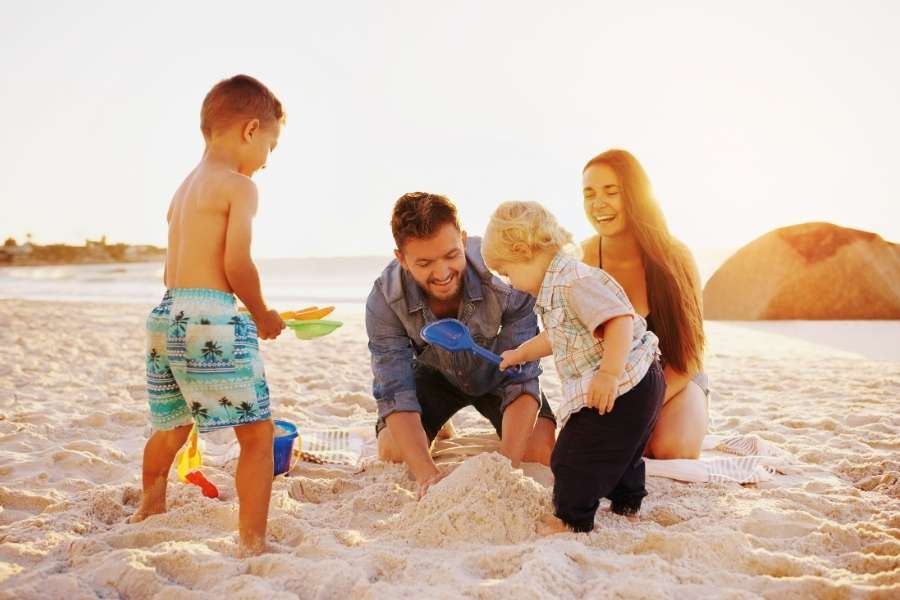
You unload bags, unpack towels, and plant your umbrella. You picture a peaceful family seaside holiday under the warm sun. Then comes the whining complaint: “I am bored.” Keeping children occupied near the surf is quite a challenge. Sand gets everywhere, waves look intimidating, and patience runs thin. Yet, the coast offers an enormous open playground. With simple ideas ready to go, boredom vanishes fast. Let us turn your sunny getaway into an unforgettable family adventure.
Mastering Shoreline Sand Construction
Working with wet sand sparks creative thinking and keeps little hands busy. Children learn basic balance and structure as they shape damp coastal soil. The rhythmic motion of digging ditches calms racing minds. Sand acts as an ever-changing drawing board for all ages. Instead of tiny plastic cups, encourage children to map out a miniature fortress. This transforms a quiet rest period into an engaging team project. Families often scout the best beaches to visit for a perfect summer holiday to find wide sandy shores suitable for massive sand builds.
Proper sandcastle building requires the right balance of sand and sea water. Dry dust collapses right away, while muddy sludge slides into a heap. The secret is packing wet sand firmly into dense foundation layers. Dig trenches, shape ramparts, and test how waves hit the outer walls. Choose sturdy spades with reinforced handles instead of brittle plastic scoops. Carry two wide buckets to haul seawater straight to your building spot. Gather smooth pebbles, driftwood, and kelp to decorate towers and bridges. Construct your fortress during falling low tide to gain dry building time.
These creative tasks deliver fantastic fun beach activities for toddlers and kids. Younger children love patting down wet mounds with their hands. Older siblings can plan deep moats and defensive tunnels. When youngsters focus on a shared goal, daily arguments quickly vanish. Parents can sit back, relax on their towels, and enjoy the show.
Digging trenches also teaches kids about ocean forces in direct ways. They see how water pressure fills canals and softens packed soil. If a wall crumbles, they rebuild it stronger and wider. They learn patience and teamwork without opening a textbook or screen. Such playful moments turn basic sand piles into lasting family memories. A small spray bottle filled with sea water keeps delicate carvings moist.

Exploring Nature Along Coastal Rock Basins
Low tide pulls back the sea to uncover hidden rocky worlds. Walking across these shallow zones invites lively discovery for every young mind. Instead of reading books, kids observe living creatures right before their eyes. This transforms your family seaside holiday into a rich marine journey. Families enjoying sailing adventures and exploring Greeces most charming small ports by catamaran frequently drop anchor near rugged rocky bays to discover hidden coastal inlets and rich shallow marine life.
Searching through rocky tide pools demands calm focus and gentle steps. Children learn to wait quietly until small hermit crabs crawl out. They can spot slippery weed, watch darting gobies, and view sea anemones. Coastal conservation teams suggest looking closely without prying animals off their stones. Pack sturdy neoprene water shoes with rubber soles to stop sharp cuts. Step on bare stone surfaces rather than slippery green sea grass. Fill a clear bucket with water to inspect tiny swimming animals. Always release every living creature back into its original rocky shelter.
Connecting with living sea creatures builds genuine respect for nature. Children learn how tides rise and fall through real daily observation. A morning spent exploring rocky cracks leaves deep impressions on young minds. It sparks curious dinner conversations that continue long after your vacation ends.
Kids also develop keen observational skills while crouching near still water. They spot camouflaged shrimp hiding under brown kelp frills. They notice how limpets grip rocky perches against rough sea spray. This quiet focus balances out high-energy running across open sand. It gives energetic children a peaceful space to recharge their minds.
Running Wild with Active Coastal Games
Lounging under a wide canopy works for an hour, but energetic kids need action. Expansive sandy stretches offer the ultimate open arena for outdoor games. Sprinting across soft ground builds muscle and burns off restless youthful energy. Introducing lighthearted group sports creates shared family laughter and friendly matches.
Setting up simple beach games turns an empty shore into a sporting field. You do not need expensive store gear to create lively entertainment. Plain household gear, bouncy rubber balls, and drawn sand lines supply continuous fun. The uneven surface makes every sprint unpredictable for parents and children alike. Kick a soft football between two upright driftwood posts planted firmly. Toss round sea stones into numbered scoring rings dug in sand. Throw light flying discs that curve wildly on coastal wind gusts. Run backward relay races while balancing small shells on plastic spoons.
These energetic challenges rank among the best beach games for a family holiday. They keep older children off mobile screens all afternoon long. Younger siblings enjoy running across open space without bumping into walls. A sudden relay race brings families together through hilarious tumbling moments. After sweating under the sun, diving into the surf feels incredible.
Games also help shy kids make friends with other families nearby. A casual game of catch invites neighboring children into the fun. They share laughter, create spontaneous rules, and learn fair team play. Sand provides a soft cushion, keeping bumps and bruises to a minimum. Everyone stays active, cheerful, and ready for a good night of sleep.
Protecting Young Explorers Near the Ocean
High-energy seaside fun must always balance with constant family safety habits. Sun and sea air drain small bodies much faster than backyard playtime. Shore currents change quickly, and strong midday rays dry out delicate skin. Establishing solid routines around hydration and water safety guarantees an easy trip.
Mastering water safety remains the foremost duty for every caring parent. Lifeguard services urge families to swim only between marked red and yellow flags. Never turn your back on the waves when children play near shore. Sudden rolling swells can knock little toddlers down in a single heartbeat.
Vital Rules for Ocean Swimmers
Before letting children sprint to the water, set clear physical markers on land. Point out a bright umbrella so children never lose their bearing. Explain how sea currents drift and teach children to stay calm if moved.
Knowing how to keep children safe at the beach requires steady supervision. Pick an adult watcher whose sole task is watching swimmers without mobile screens. Swap this monitoring role every half hour so nobody gets tired or distracted. Swim solely within guarded areas watched by certified ocean rescue teams. Equip non-swimmers with approved life vests rather than inflatable arm rings. Show kids how to spot hidden drop-offs and breaking wave sets. Keep an adult within arm reach whenever young children wade into water.
Protection also means shielding family skin from harsh ultraviolet sun rays. Pitching sturdy shade tents offers a cool refuge during hot midday hours. A breezy shelter cools flushed faces and gives babies a quiet resting nook. It also protects your personal gear from windblown sand and heat.
Sun safety works best when it becomes a natural family habit. Teach kids to put on wide sun hats before heading out. Long-sleeve rash vests protect tender shoulders during long hours in salt water. Cool shade breaks keep headaches away and reduce heat exhaustion risks. Simple safety habits keep tears away and ensure smooth holidays.
Serving Simple Snacks for Endless Energy
Swimming through rolling waves works up a massive appetite in minutes. When hunger hits suddenly, cranky tantrums follow right behind. Packing smart snack ideas prevents mood crashes and keeps everyone going all afternoon. Salt air quickens thirst, so bring plenty of fresh drinking water every day.
Finding easy beach snacks for hungry kids makes morning cooler prep simple. Skip sticky candy and chocolate bars that melt into liquid slop. Instead, pick cooling produce, wholesome grains, and savory finger foods kids can grab easily. Pack cold watermelon wedges, sweet blueberries, and crisp grapes in tight boxes. Stuff whole-wheat pita pockets with mashed beans, cheddar cheese, and sliced cucumber. Add savory cheese sticks, crunchy sunflower seeds, and whole-grain oat bites. Pour icy fruit puree frozen solid inside double-wall insulated water flasks.
Finger foods work best on beaches because sandy fingers ruin messy sandwiches. Bite-sized snacks mean kids can eat quickly and get back to playing. Packing chilled fruit supplies both natural sugar and refreshing hydration in every bite. Keep drinks on ice so every sip feels cool and reviving. Happy bellies ensure pleasant moods throughout your coastal afternoon.
Beachcombing Treasures and Making Shore Art
When midday sun peaks, slow down the pace with calm art tasks. The coast offers an endless treasure chest of loose natural supplies. Children love hunting for tiny gems scattered along high water lines. This peaceful interval lets tired limbs recover while nurturing personal artistic talents.
Scheduling time for shell collecting hones sharp observation and steady patience. Challenge your kids to find spiral shells, smooth stones, and sea glass. Remind them to leave living mollusks undisturbed on their sea perches. Strolling along the wet strand turns into a fascinating coastal scavenger hunt.
Turning Found Objects into Coastal Art
Once your buckets fill up, find a smooth stretch of damp sand. Encourage your young artists to arrange their finds into large shore mosaics. They can shape giant sea turtles, swirling star patterns, or smiling family faces.
Build circular mandalas using white clam shells and dark basalt pebbles. Make funny sand faces using brown kelp hair and snail shell eyes. Stamp clean shells into soft clay lumps to create lasting fossil shapes. Take quick photos of these sand artworks before incoming waves roll in.
This artistic project shows children the simple charm of impermanent nature art. Watching the tide wash away a detailed sand picture teaches acceptance and grace. It also respects the wild coast, leaving the sand pristine for tomorrow. Kids feel proud of their work without bringing plastic trash home. Natural creativity turns an ordinary beach walk into a magical journey.
Art projects also spark great conversations about marine conservation and shoreline cleanliness. While hunting for shells, children often notice stray bits of plastic trash. Turning cleanup into a game teaches environmental care early on. Kids learn that protecting wild beaches keeps sea animals safe from harm. They leave the shoreline cleaner than they found it every time.
Catching Calm Waves on Buoyant Floats
A sunny coastal trip feels incomplete without jumping straight into rolling surf. Splashing in refreshing sea water lifts spirits like nothing else on earth. For young children, floating across gentle ripples builds ocean familiarity and water comfort. It creates lasting water confidence that helps them throughout adult life.
Using durable floating toys adds tremendous excitement to calm ocean bays. Foam kickboards, soft bodyboards, and inflatable rafts help kids glide along foamy swells. Still, parents must manage floats cautiously, as ocean gusts can push light rafts out rapidly. Use inflatables only in calm coves, lagoons, or shallow guarded zones. Avoid using light floating mats during strong offshore wind warnings. Pick rigid foam bodyboards secured with a sturdy wrist leash cord. Keep an adult within arm reach of any child on a float.
Managed with care, riding gentle rollers delivers genuine childhood excitement. The thrill of catching a soft wave right to the sand never fades. These shared moments form the joyful core of your family seaside holiday. Little triumphs over rolling waves give children immense pride and joyful smiles.
Floating also helps children learn to read moving ocean rhythms naturally. They watch incoming sets, timing their kicks to glide across foaming white water. They learn how currents push and pull against their floating boards. This practical knowledge builds smart water sense that keeps them safe anywhere. Pure joy and physical exercise combine into the ultimate afternoon fun.
Frequently Asked Questions
How can I protect my children from sunburn while playing on the beach all day?
Put on broad-spectrum sunscreen with SPF 30 or higher twenty minutes before heading outside. Reapply sunscreen every two hours, especially after swimming or towel drying. Dress children in UV-protective swimwear, wide sun hats, and protective sunglasses. Set up a well-ventilated beach tent to give sensitive skin regular breaks from harsh midday sun.
What should I do if a child gets stung by a jellyfish?
Get your child out of the water immediately and keep them still to slow venom flow. Rinse the stung skin with saltwater instead of fresh water, which fires more stingers. Scrape away remaining tentacles using the firm edge of a plastic card. Soak the sting in hot water for twenty minutes to ease pain, and seek medical help if needed.
How do you remove stubborn, sticky sand from children’s hands and feet?
Sprinkle ordinary talc-free baby powder or cornstarch over damp, sandy skin. The powder absorbs lingering surface moisture rapidly, making dry sand slide away without painful rubbing. Keep a small bottle in your beach bag alongside a clean hand towel for smooth cleanup before getting in the car.